Chunnambu
Shell lime, burnt and slaked, then burnished until the wall holds a sheen.
Kerala mural painting
I am Vandana Kamath. I paint in a tradition that has been worked on the temple walls of Kerala for more than a thousand years, following the same proportions and the same order of working, in acrylic on canvas.
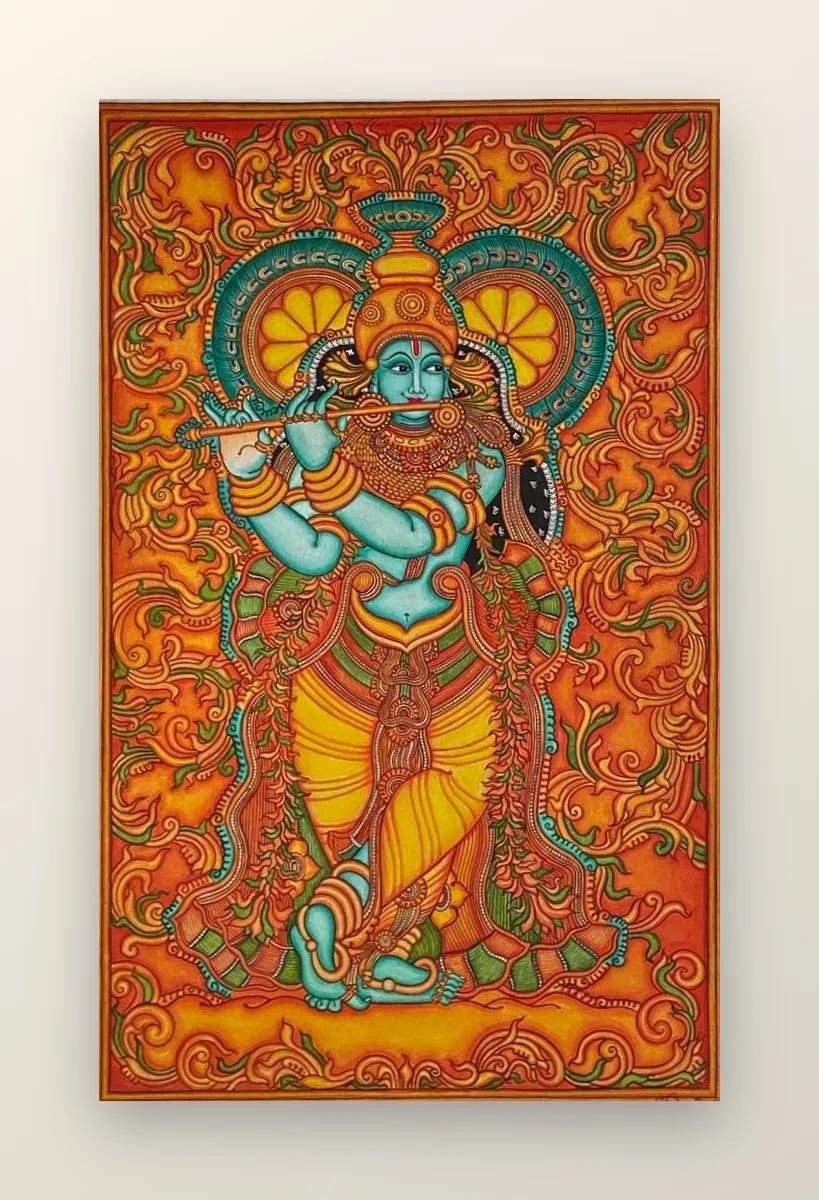
The paintings
Each of these is an original, painted by hand in acrylic on canvas. Sizes and working time are given because both matter if you are thinking of living with a piece. Select any painting to see it larger.
The art form
Kerala mural painting is about depicting mythology. It is also called temple art, because it originated in the temples, churches and palaces of Kerala, and the form dates back to the ninth to twelfth centuries CE. The colours were pigments procured from naturally available resources. As the name panchavarna suggests, only five colours go into traditional mural painting, even today.
Shell lime, burnt and slaked, then burnished until the wall holds a sheen.
Yellow ochre. The whole drawing is set down in this before any other colour.
Red ochre and laterite, ground fine. It carries appetite, wealth and anger.
A leaf green, kept for the serene and the divine. Krishna is green for a reason.
Lamp soot in coconut oil. It goes on last, and it is the line that decides everything.
In recent years artists have been using readily available market pigments instead of natural ones, and have extended this temple art onto canvases, wooden panels, bamboo decor products and even fabrics.
How a mural is made
Creating murals was and remains a time consuming and laborious process. Most of the work happens before a single figure is drawn, and none of it can be hurried, because every stage has to dry completely before the next one begins.
Various naturally available materials are mixed in specific proportions and applied to the wall. Once dry, several more coats follow, each given enough time to dry completely.
The process is repeated with different mixtures, smearing the wall again and letting it dry. Only when the ground is finished is the wall ready to be painted on at all.
Only then can the artist set out the design on the wall, working out the whole composition before any colour is committed to it.
Finally the painting itself, in five colours and no more. The discipline of the palette is what holds the work inside the tradition.
I have used acrylic colours in all my mural paintings, following all other meticulous techniques and maintaining their symbolic richness without losing their soul.
About
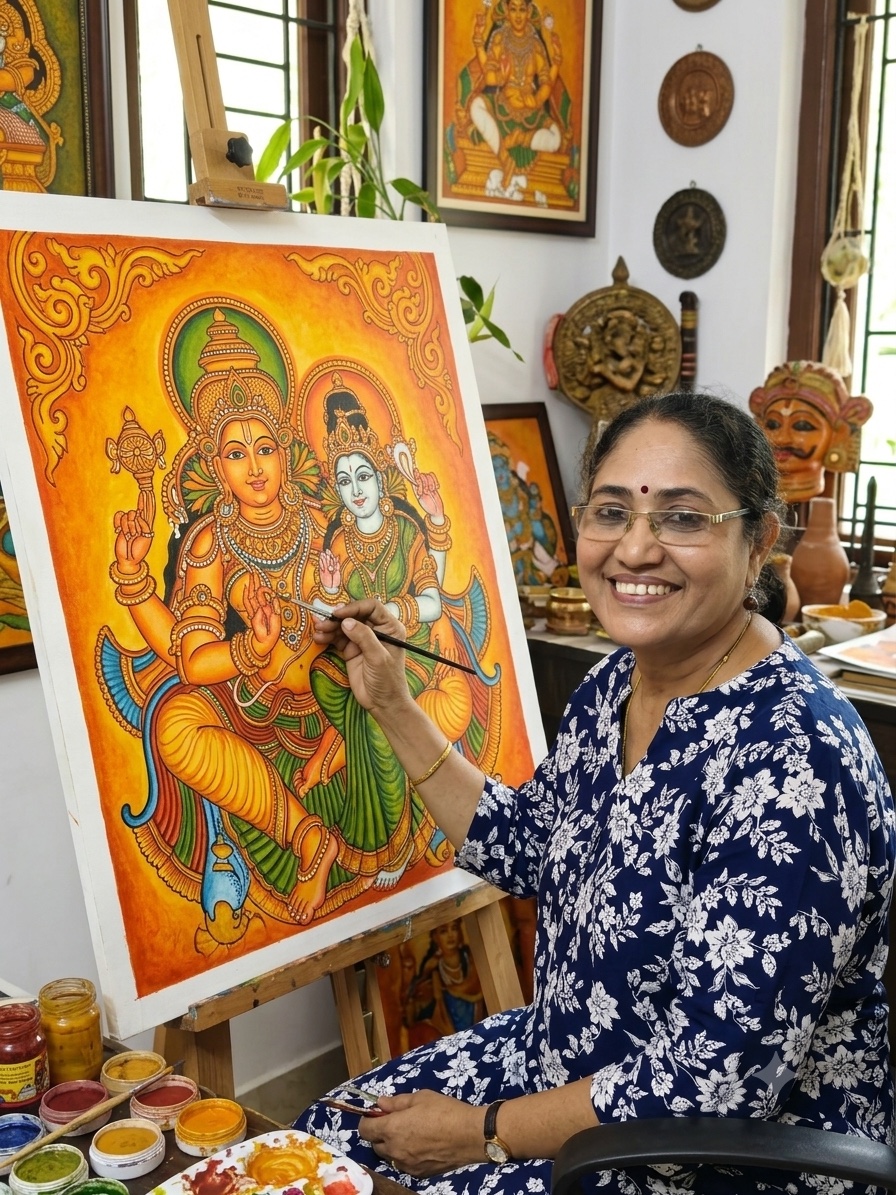
I have been in the Kerala mural tradition for over twelve years. I learnt the art from a professional mural teacher.
My work stays close to traditional mural art. I follow the classical proportions and the various systematic steps involved in it.
I take a small number of commissions each year, mostly for private collections, made to their customised requirements.
Journal
Notes on materials, on reading temple walls, and on the parts of the practice that are rarely written down.
In Kerala mural painting, colour serves as a visual language, expressing the nature and qualities of divine, human, and demonic characters. Rooted in the ancient concept of the three Gunas-Sattva, Rajas, and Tamas-each colour carries a deeper symbolic meaning.
Read the article12 March 20251 min readSkin colour in a Kerala mural is never a likeness. It is a statement about temperament, fixed long before the painter picks up a brush, and it is the fastest way to learn to read a wall.
Read the article4 February 20251 min readThe five colours were never really about the pigments. They are a set of decisions about character, and those decisions survive the move from ground earth to a tube of acrylic intact.
Read the articleEnquiries
If a piece here interests you, or you have a commission in mind, write to me. Please tell me roughly what size you are thinking of and where it will hang; those two things shape everything else.
I reply to everything myself, usually within a few days. Commissions are taken in small numbers, so there is often a wait.